The Good, Bad, The Ugly of a Spiritual Book That I Mostly (or At First) Loved.
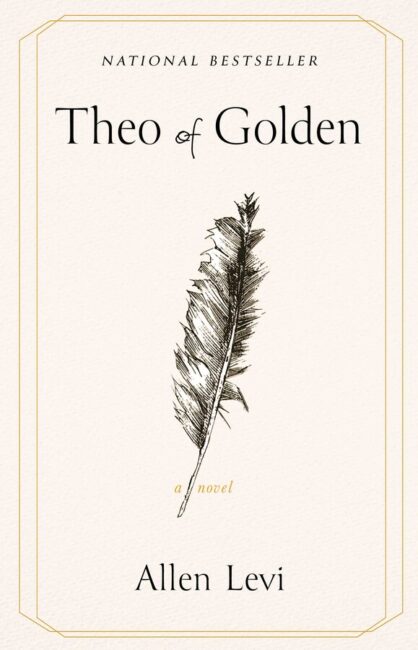
This book (n case you have been living under a rock and have not heard of it), has been enjoying rampant success. Even to the point where a film is to be made with Tom Hanks playing Theo. I enjoyed this book quite a bit for the first 88%. (I listened to the excellent audio version narrated by actor David Morse, which created wonderful depth to the experience).
For those unfamiliar with the plot, this fits squarely into the currently popular “feel-good, cozy, and often unrealistic” genre. If this genre isn’t your jam, feel free to skip—unless you are curious about why this book is currently SO popular yet deeply controversial. I have quite a bit to say about that!
The Good (aka The Cozy Warmth– The First 88%)
The nutshell plot: Theo, a wealthy but humble elderly man born in Portugal who has long lived in New York City, arrives in a small town in Georgia (the U.S. state., not the Caucasusian Georgia) named Golden (apparently based on Columbus, Georgia) and quietly begins doing transformative good deeds.
For the majority of the book, I was swept up by the beautiful language. A profound sense of mindfulness permeates the text, without ever using that word. Theo’s actions reflect a deliberate slowing down—a practice of paying close attention to art, music, nature, and the people around him.
The world-building is excellent. Through Theo’s memories of childhood in Portugal and his present-day strolls through Georgia, I felt a cozy warmth. The novel beautifully explores how community is forged through intentional friendships.
Theo’s refined elegance, artistic eye, and attuned ear for music were explored in satisfying ways. I particularly enjoyed the many discussions and descriptions involving art and music.
At times the writing was simplistic and overly soothing, but so uplifting as to remain very compelling. Throughout, there was a sense of faith—a belief in something greater—expressed especially through the profound beauty of nature and its ability to help transform even the deepest sorrows. There were slight hints at something more denominational or theistic, but the touch was light enough that I don’t think it would alienate most readers.
Generosity and giving—of time, attention, resources, or what have you—are central to the book. Endearing. Perhaps this book resonates in these times because of its message of bringing a bit of “heaven to earth” through doing good, embodying loving actions and relationships, caring for others and the earth, seeing the good in everyone, and being mindfully present.
Furthermore, the book approaches grief and brokenness with stunning tenderness. Take this short excerpt of Theo processing a devastating loss:
After weeks of walking, the beauty that had surrounded him… became consciously present again… … under the spell of a resplendence that would not be denied…He wept… and moaned…and choked on his sorrow…a sob that seemed to carry the hurt of all his stolen hopes, tore through his chest. Bit by bit, he emptied the bitter cauldron of his anguish and then sat in silent stillness…Slowly, a calmness, absolute and irresistible, began to possess him with such presence that, in those moments, he knew his season of darkest grief was over.
The novel demonstrates a beautiful sense of Imago Dei (the image of God) in everyone. It tackles heavy themes—war, poverty, abuse, loss, injury, and legal issues—so it isn’t entirely clueless about life’s hardships (there is even a brief nod to the history of lynching in the town, though it felt awkwardly inserted), but aims to convince readers that Agape can help mend life’s vicissitudes.
Ultimately, Theo’s approach to things does give readers some ideas about how to deal with loss and pain. The book is definitely a bit slow, and certainly on the saccharine, milquetoast side of things. But because the writing was so enjoyable and the warmth so permeating, I didn’t much mind.
The Not So Good (aka Warning Signs I Ignored)
However, beneath the artful prose and warmth were several warning signs I originally glossed over.
For example, the book centers around Theo “bestowing” portraits he has seen in a coffee shop and buys to give to the subjects. I know this is not supposed to be a realistic book, yet these portraits—including portraits of children—were made without the subjects’ permission and then publicly displayed in the coffee shop. I kept thinking: seriously? Imagine discovering that a stranger had photographed you, drawn your face, and put the resulting portrait on public display without ever asking you. The book treats this as charming, but it feels remarkably out of touch. The whole premise has the quality of a well-meaning older white man imagining that because his intentions are good, the boundaries involved don’t matter. And that becomes especially uncomfortable given how much the novel wants us to see Theo as exceptionally perceptive, respectful, and attuned to other people.
By the same token, with regard to these “bestowals,” this oversimplified fiction has Theo sending anonymous notes with no return address asking the “bestowee” of the day to meet him at a certain time and place. Like no one else has a life? He just expects them to show up when he says so?
There is a long build-up about the first woman he gives a portrait to and her very realistic fears about meeting a strange man. But then subsequent recipients just show up without question. Overly simplified poor writing.
So the whole main plot around the portraits had a mix of pedestrian writing andalarming assumptions.
Similarly, the town feels like a “small town” until it suddenly changes into a “medium city” depending on what the author needs for the plot. Theo is also supposedly sodiscerning, but of course, the local coffee shop just happens to have the best coffee ever. And the best street musician, best this, best that. This repetition reinforces the pablum-like, go-down-easy quality of the fable.
I also cringed a bit when Theo began showing up daily to visit Lamisha, a little girl whose family barely knew him. While I knew the novel’s feel-good tone guaranteed her safety, the author relies too heavily on literary convenience, completely ignoring how alarming and risky these boundary-crossing dynamics look to a modern reader.
And while I enjoyed the discussion of the arts, music, and erudite details, I couldn’t shake the feeling that the author also wanted us to know how smart and cultured he was.
The characters, too, sometimes feel more like caricatures or symbols than fully realized people: the utterly precocious child; the loud Italian-American with opinions; the hardworking, impoverished Black father; the homeless woman who also happens to be mentally ill; the abused woman who is drop-dead gorgeous; the brilliant, world-class cellist who just happens to be in this small town, which just happens to have the best professor of music.
There is still merit to the stories they each have. And maybe, just maybe, some of these stereotypes are often true and thus the book is showing us tolerance, grace, and mercy for all. But at the same time, it reinforces stereotypes, so it’s a tricky slope which I fear the author did not consider deeply. There is a lot of this sort of thing throughout the book. Still, I glossed over it because I was enjoying the prose and the larger themes so much.
The Bad, (aka The Bait-and-Switch; The Final 12%)
But then…
At Chapter 57, my overall enjoyment and appreciation of all the charm changed dramatically. SO many things, in my opinion, were done so poorly that I wound up questioning and revisiting the entire work—and suddenly noticed that I had missed a whole lot of yellow-to-red flags.
What happened from that point on? (THESE NEXT 2 PARAGRAPHS CONTAIN SPOILERS!)
Suddenly, after a book in which everything is mostly hunky-dory, we get three—count ’em, three—tragedies at once. Seriously, Levi: if you needed to kill off Theo, why did you have to make it bloody and mangle two others in the process? You could have killed Theo off from simply old age! It was the type of thing an incredibly unskillful author does to make a point or force a plot change. Entirely jarring and nonsensical here.
Then came the memorial service. Oh my, did we get all doey-eyed version of Christian here, with platitudes up the yin-yang!
I have no argument with faith-based fiction, but this felt like a total bait-and-switch. The book starts out as a quirky, secular-seeming, heartwarming novel about an eccentric artist doing nice things. By the time it drops a heavy-handed, preachy sermon at the end, it felt like the author had tricked me.
In retrospect, the heavy-handed allegory becomes obvious: Theo of Golden operates as a theological metaphor where Theo is a Christ-figure pouring out unconditional love. His origin from the Douro (“golden”) River was a spiritual hint, his generosity was divine, and his righteous rage over a destroyed portrait was a clumsy parallel to Jesus and the money changers.
Fine, fine. But hiding a theological lecture inside a heartwarming novel feels manipulative, and the execution was tasteless.
The Ugly (aka A Frustrating Climax)
Finally, I am flabbergasted by anyone who says they loved the ending. (Which is something I have heard a lot. Say what???) (SPOILERS IN NEXT TWO PARAGRAPHS!)
Imagine finding out that a wonderful older man who befriended you, spent endless time with you, and changed your life was actually the father you never knew—but he chose to hide it in a letter delivered after he died. Personally, I would be SO PISSED.
What was he thinking, truly? To me, this plot point is a massive emotional betrayal masquerading as a “beautiful mystery.” He makes a massive point of reuniting Ellen with her daughter, but won’t grant his own child that same transparency while he is alive? Just… infuriating.
All of this got me looking around for critical reviews. I found many people who hated the writing or the entire concept. I didn’t revert to that. I still enjoyed what I enjoyed. But my critical eye had been catalyzed by that disastrous final stretch, and I started seeing things I had previously glossed over.
First, I kept being triggered by the Guatemalan figure being called “the little man.” I think we only heard his name once or twice. I hadn’t even noticed earlier that he was called “an illegal.” And what kind of choice was it to have this “illegal” be the hit-and-run perpetrator who killed someone?
I began to see how many racist, misogynist, and ableist tropes were buried within this feel-good novel.
For example, there is the professional woman who feels stuck in her job and only wants to be a mother. An abortion earlier in her life is framed as a source of regret, and it never seems to occur to this married woman—with two incomes and a supportive husband—that she could have both a career and a child. Motherhood is framed throughout as the best choice for a woman, and abortion as a shameful choice in several places in the book.
Because I listened rather than read the book, the eye dialect used by a Black grandmother was toned down somewhat. But was this another racist choice, when the white characters all spoke perfectly?
And the book becomes more and more Christian as it goes on. Again, nothing against Christianity, but this Jonathan Livingston Seagull for our times should be clearly understood to have strong Christian tones.
Taken individually, these things might be dismissed as incidental. Taken together, though, they create a pattern: casual misogynist, racist, ableist, and white-Christian-savior plotlines embedded within a heartwarming, soothing, gentle story.
And this is what ultimately bothers me most:
These tropes can lull us into accepting very old-fashioned assumptions without even noticing them: non-white characters as the poor or damaged people who need help; women as people whose deepest fulfillment is found in motherhood; the benevolent, cultured, wealthy white man who arrives and improves the lives of everyone around him; and Christian tropes used to provide transcendence while glossing over systemic issues.
So: read it for the feel-good. But be very, very aware.
Because there is genuinely a lot here that I loved: generosity, acts of kindness, weaving community, experiencing the beauty of life through nature and the arts, and the possibility that sorrows can be transformed and that people can become renewed and healed. It can be very moving, passionate, and picturesque.
Yet it can also lull the reader into some very old-fashioned ideas about who needs saving, what women should want, who gets to be the wise and generous benefactor, and how spiritual meaning can be used to smooth over the harder realities of life.
I haven’t yet gotten around to A Man Called Ove, nor A Gentleman in Moscow, but if you crave a book featuring charming elderly male protagonists whose quiet routines gradually transform a local community, I hear those are both a whole lot better—and less saccharine. (Of course the Towles one would be; what a writer!!)
And, apparently, no Christian flavor.
I appreciated your extremely insightful and well thought out review of this book. I have seen this kind of “bait and switch”once in a while in ohter novels, though often with political motives. Very disappointing.
Thank you Nick. There’s still so much I really did love about this one, so it’s not lightly that I criticize it. But I always encourage my clients to be thoughtful and aware when it comes to “spiritual matters.”